

Faster decisions.
Clearer accountability.
Execution that matches ambition
Radically is an operating model design consultancy for complex organisations that need faster decisions, clearer accountability, and execution that matches ambition.
We co-design operating models that connect the way your organisation works to the results you are trying to achieve.
What is an Operating Model?
An operating model is not an org chart. It is the full set of choices that determines how work flows from strategy to result. It includes
- the structure of accountability
- the rhythm of decision-making
- the way priorities get set and investment allocated
- the governance mechanisms that either enable speed or throttle it
- the cultural norms that shape how authority actually operates day to day.
Each of those elements either accelerates value delivery or impedes it. When these elements are misaligned with what the strategy actually requires, the organisation cannot perform its way out of the problem.
The constraint is structural. Redesigning it is the work.

How We Redesign the System
An operating model is not a collection of separate parts. Structure shapes governance. Governance influences ways of working. Ways of working reinforce culture. Culture affects the capabilities an organisation can build and sustain. We design these elements together because performance shifts when the whole system works as one.
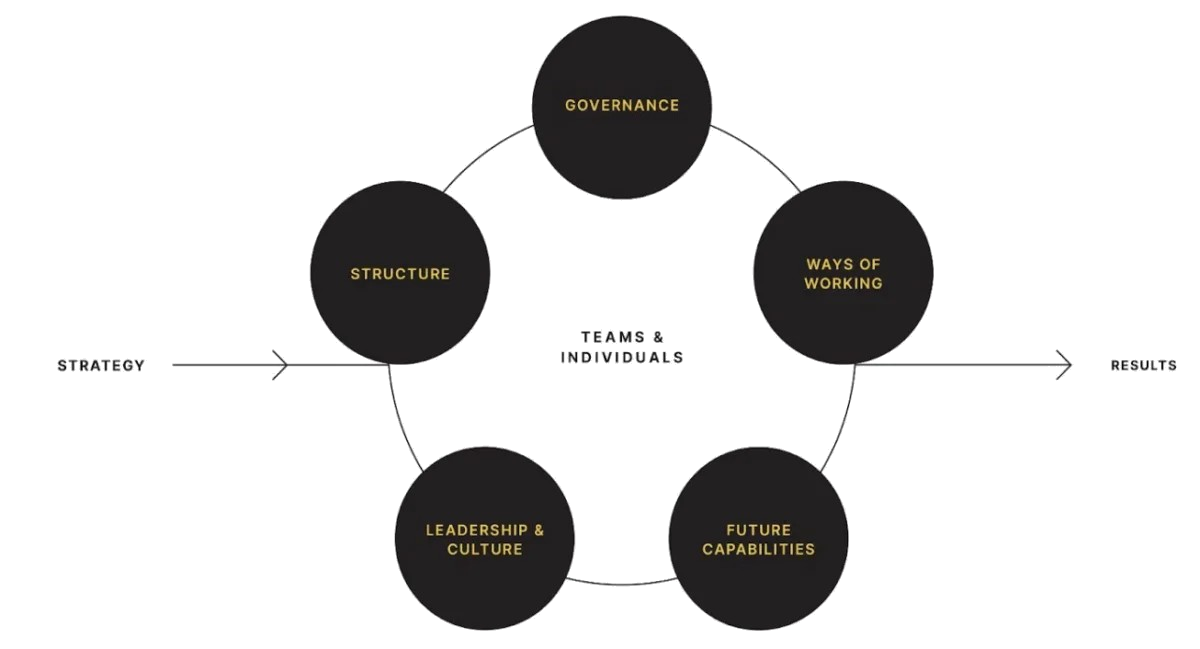
Structure: Structural problems rarely announce themselves as structural problems. They show up as mandate confusion, duplicated effort, and decisions that travel further than they should. We design structures that put accountability close to the work and reduce the coordination overhead that quietly consumes senior capacity.
Governance accumulates over time. Each risk event, each audit finding, each failed project adds another layer of oversight until the system is built for control and unequipped for speed. We redesign governance that enables fast, good decisions without abandoning the oversight that genuinely matters.
Ways of Working: The gap between designed intent and operational reality is almost always widest here. Changing ways of working without changing the structural and governance conditions that produced them is why so many agility programmes fail to stick. We design ways of working that the system can actually sustain.
Culture is downstream of system design more than most leaders want to believe. The incentives, the metrics, the behaviours leadership visibly tolerates — these are design choices that either reinforce or quietly undermine everything else. We help leaders distinguish between cultural symptoms of poor design and problems that require direct intervention.
Future Capabilities: Capability planning, disconnected from operating model design, consistently results in investment in skills the organisation is not yet set up to use. We help leaders make deliberate choices about what to build, what to partner for, and how to sequence that investment so it lands at the right moment.
our approach
Operating model design that works in practice
Redesigning an operating model is one of the most significant changes an organisation can make. Done well, it unlocks performance that effort alone could never produce. Done poorly, it creates uncertainty, consumes leadership energy, and leaves the organisation more fragmented than before.
Start with how the organisation creates value, not with a preferred model
Operating model work often goes wrong when the answer is chosen too early. This might be a product model, a value-stream model, a functional model, a matrix model, or a platform model. Each can be useful in the right context. None is the answer by default.
We start with the strategy, the economics of the business, the work that creates value, and the constraints that are getting in the way. From there, we help you co-design the model the organisation actually needs, rather than forcing the organisation into a fashionable template.
The goal is not to implement a model. The goal is to build the system required to deliver the strategy.
We design the whole management system, not just the structure
The org chart matters, but it is only one part of the operating model.
Performance is shaped by the whole management system: how priorities are set, how funding is allocated, where decisions are made, how governance works, how work flows, how teams interact, and how leaders manage performance.
Changing structure without changing those things usually creates movement without much improvement. The organisation may look different, but it carries the same problems into a new shape.
That is why we design the operating model as a complete system. Structure, accountabilities, decision rights, governance, planning, funding, delivery rhythms, leadership behaviours, and ways of working all need to fit together.
Build ownership with the people who will run the model day to day
An operating model cannot be handed to an organisation, rolled out through change management, and expected to work.
The people who will run it need to understand the choices, trade-offs, and behaviours required to make it real.
That is why we co-design with the executive team, general managers, and senior leaders who will operate it day to day. They are not reacting to a finished answer. They help shape it.
You know your business. We know operating model design. The value comes from bringing those together.
This creates a stronger design because ownership is built before the model is finalised.
Case studies
Operating model design only matters if it changes how the organisation performs. These examples show how we have helped large organisations reduce friction, clarify ownership, and build the management systems needed to deliver strategy.
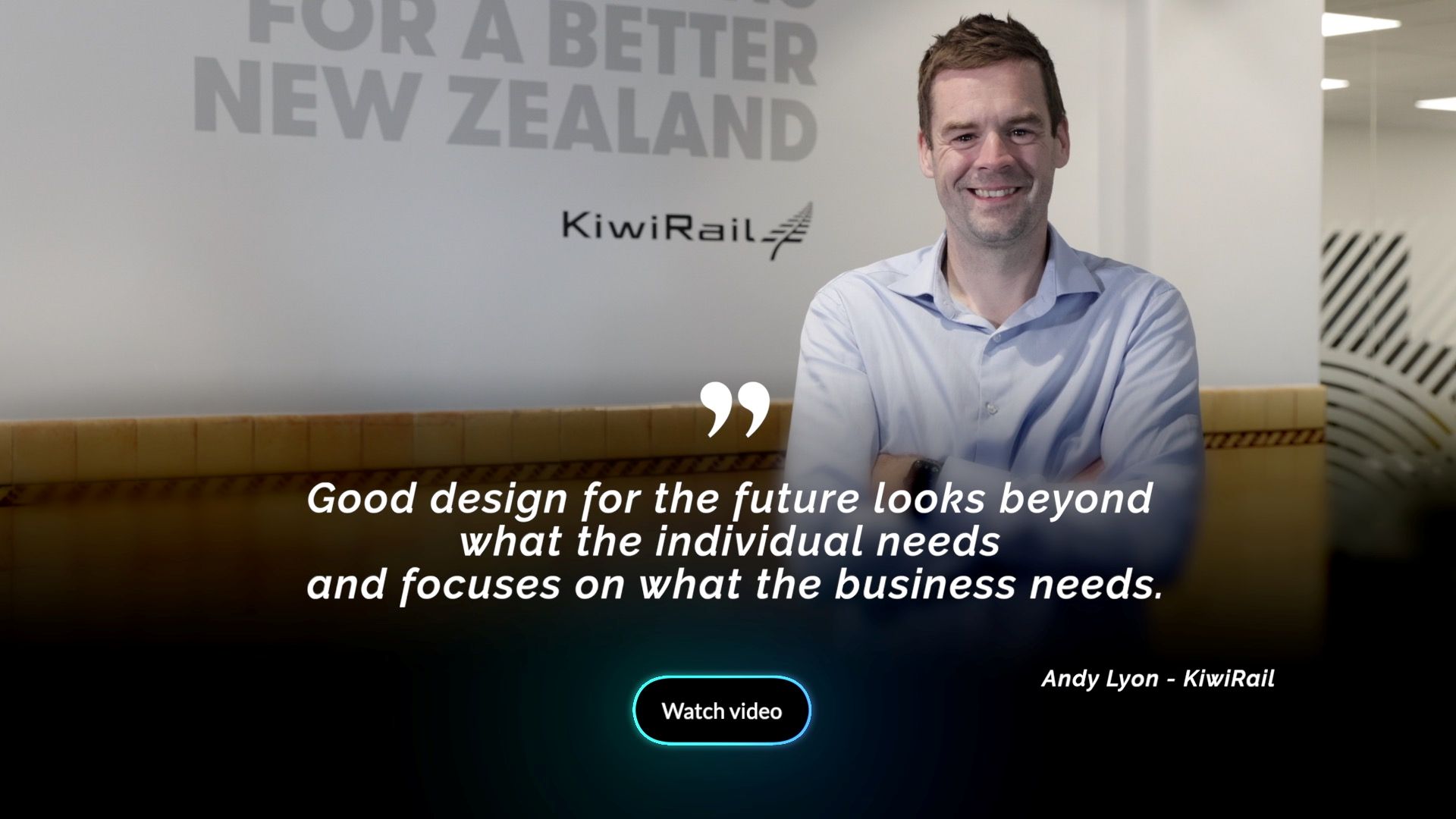
How we helped KiwiRail Wellington Metro move from fragmented, reactive coordination to a clearer operating model connecting planning, leadership, maintenance and frontline delivery.

How we helped Origin Zero redesign its operating model to improve responsiveness, reduce internal friction, and build stronger ownership of customer and business outcomes.

How we helped Mercury turn the Trustpower acquisition into stronger retail integration, adaptive delivery practices, leadership capability and sustained change across the business.
Operating Model
Design
Operating model redesign is too important to treat as an org chart exercise.
Our free guide helps leaders understand the choices, trade-offs and design principles behind operating models that improve clarity, accountability, decision-making and performance.
- Understand what an operating model really is
- Avoid common redesign traps
- Design the system, not just the structure
Operating Model Design
Design an operating model that drives performance without compromising on humanity. Download our free guide below.
