

AI has dramatically reduced the time and cost of doing work. As execution gets faster, the delays around decision-making become more significant, increasingly shaping how quickly an organisation can move.
Ask a leadership team how fast their organisation moves, and they’ll probably point to delivery metrics such as throughput, release frequency and time to market. These are measured carefully, but they only tell us how quickly work moves once someone has already decided what needs to be done.
Now ask how long it took to discontinue a product, change pricing or make a structural change the strategy has required for eighteen months. Most leadership teams probably couldn’t tell you, because decision-making isn’t measured with the same attention as delivery. That mattered less when the work itself took weeks or months, but as AI speeds up execution, delays in decision-making become much harder to ignore.
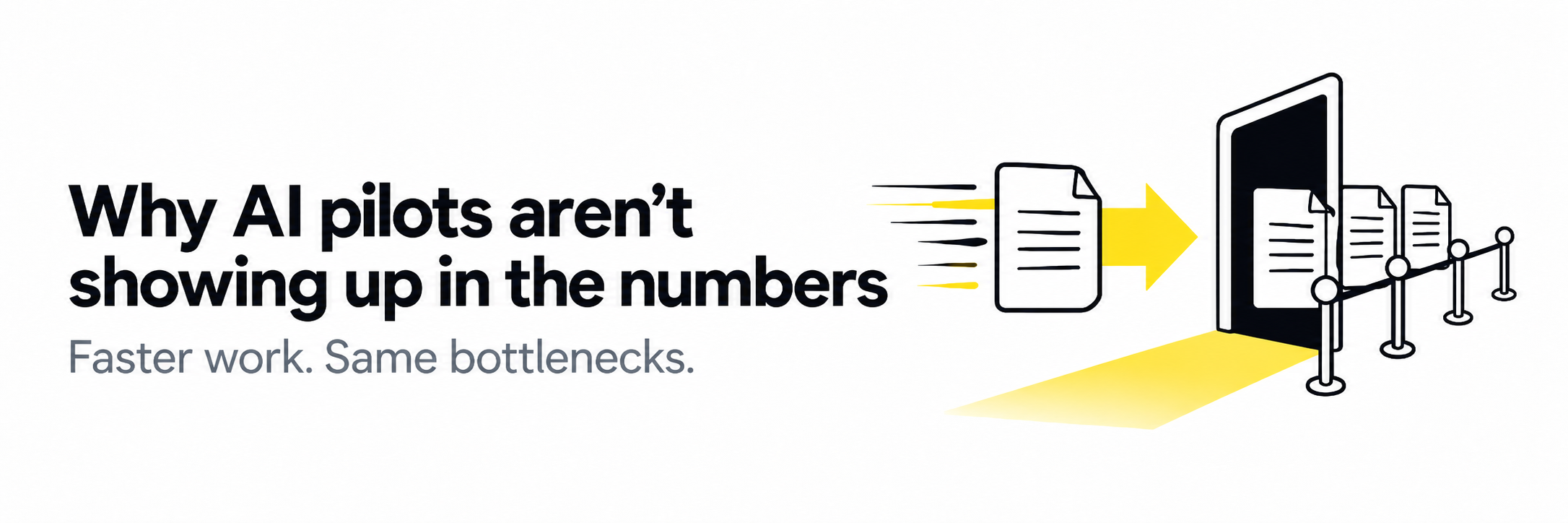
For thirty years, organisations have focused on making work faster. Agile, lean, DevOps and product operating models all sought, in different ways, to reduce the time it takes to get work done. AI is accelerating that further, with tasks such as drafting, analysis, modelling and early-stage design now taking a fraction of the time.
But that increase in speed isn’t always translating into measurable results. MIT research into enterprise AI has found that, despite significant investment, the majority of AI initiatives produce no measurable financial impact.¹ The organisations seeing stronger results aren’t necessarily using better AI. They’re also addressing the delays around the work, including the decisions, approvals and hand-offs that determine whether faster work actually leads to faster outcomes.
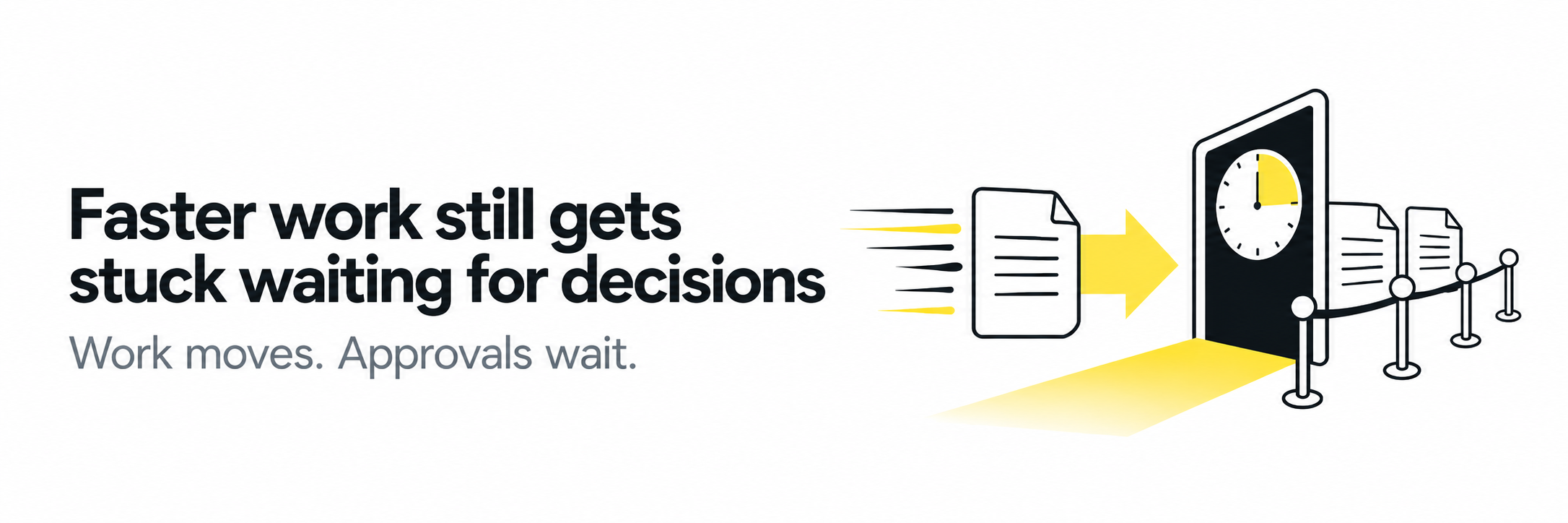
A piece of work that takes two hours but then waits three weeks for approval hasn’t really made the organisation faster. When the work itself took six weeks, a two-week approval process was easier to absorb. Now, if the work takes a day and the approval still takes two weeks, the approval hasn’t become slower, but it accounts for much more of the overall time.
That means the question is no longer just how quickly people can produce the work. It is how quickly the organisation can make the decisions needed to act on it.
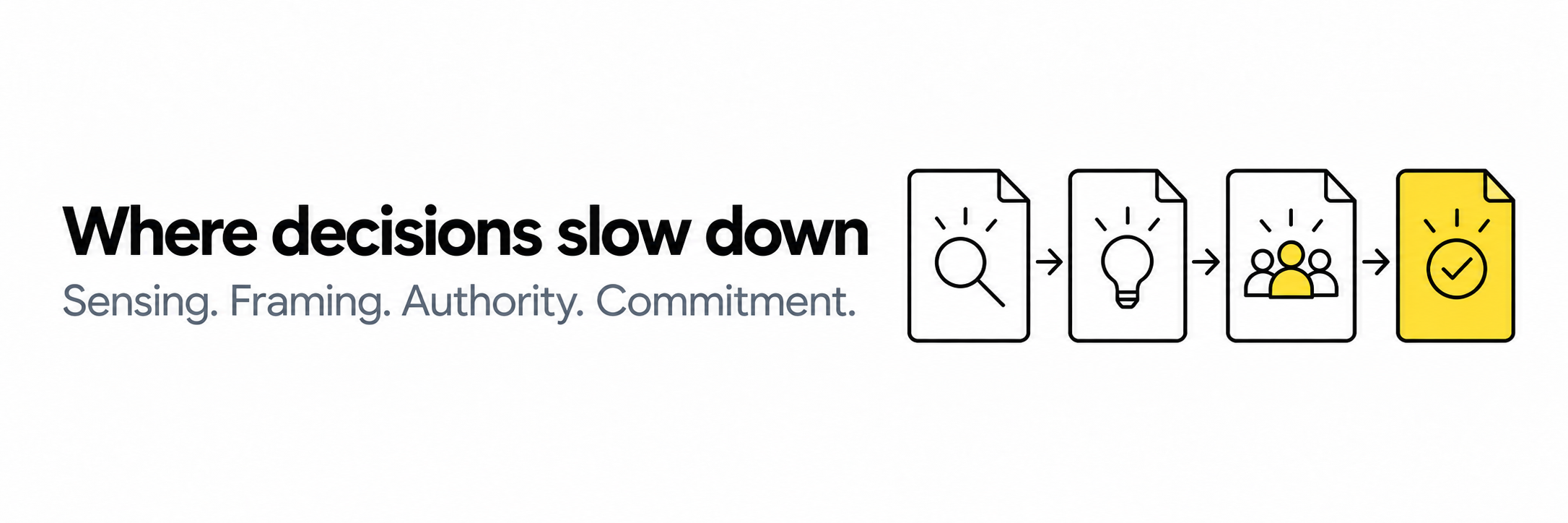
It helps to break a decision into its parts. From the moment something changes to the point where the organisation is genuinely behaving differently, there are four stages where time can be lost.
- Sensing. How long it takes to know something has changed. Customer behaviour shifts, a competitor moves or a cost line drifts. That might once have taken a monthly report to identify; increasingly, the information is available almost immediately.
- Framing. How long it takes to turn that information into a clear decision, with realistic options that can be compared. What might once have taken analysts a couple of weeks can now happen much faster with AI.
- Authority. How long it takes to get the decision in front of the person or group that can actually make it. That might mean waiting for the right meeting, getting time on an agenda or working through several layers of approval. AI does little to change that.
- Commitment. How long it takes to turn the decision into action, whether that means reallocating budgets, moving people or stopping work that is no longer needed. Again, AI does little to change that.
AI can dramatically speed up sensing and framing because they rely heavily on information and analysis. Authority and commitment depend much more on how the organisation is structured and how decisions are made.
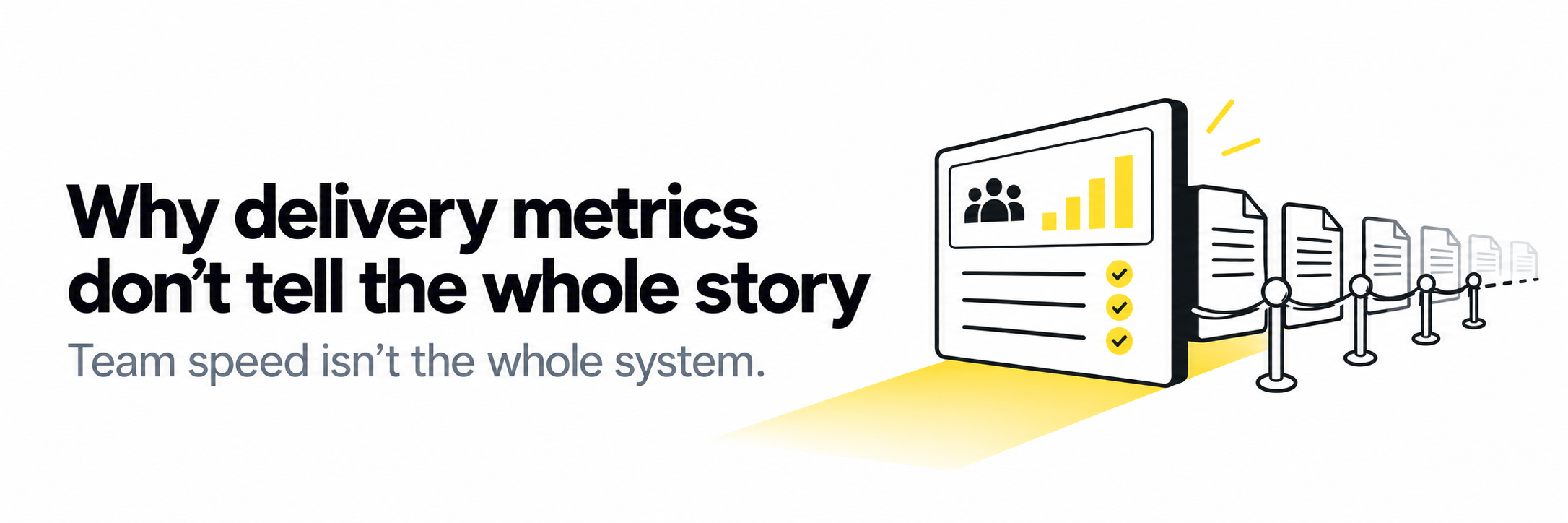
Delivery metrics usually tell you how efficiently work is moving within a team, which is often the part AI is already making faster. The bigger delays can sit elsewhere: between teams, across layers of approval or waiting for the next governance meeting.
That can create a frustrating disconnect. Reporting looks healthy, teams are busy and productivity is improving, but the organisation is still not moving any faster on its priorities. The metrics aren’t necessarily wrong; they’re just measuring the part of the system that was never the problem.
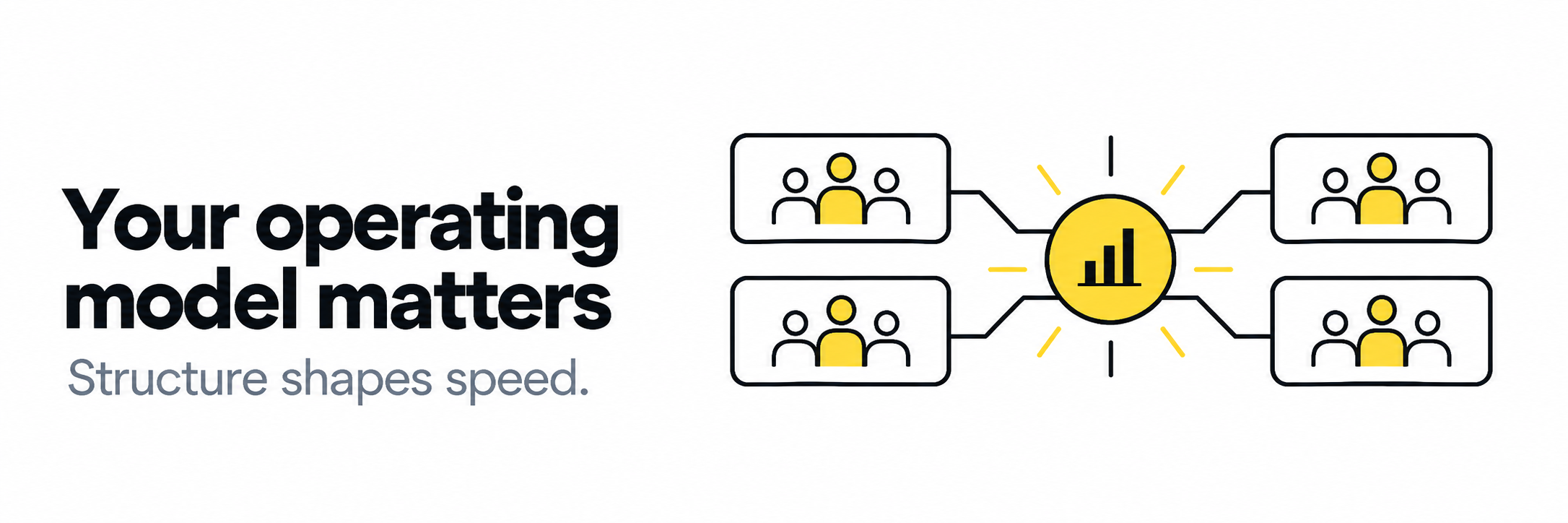
Leadership teams can sometimes treat slow decisions as a behaviour problem: people need to be more decisive, meetings need to be tighter or someone needs to take more ownership. Often, though, the bigger issue is how the organisation is set up.
If four functions need to agree, no one person is clearly accountable and the only forum with authority meets every two weeks, the decision will still take time regardless of how decisive the people involved are. That is why the operating model matters. The work itself may have been redesigned and accelerated, but if the structure, accountability and governance around it remain unchanged, decisions will still move at the same pace.
Four areas are particularly important.
- Structure. How teams are organised determines how many organisational boundaries a decision has to cross before anything can change. The more groups involved, the more opportunities there are for delay, and many organisations do not realise how many separate teams or functions are part of a decision until they map it out.
- Role clarity and accountability. It is common to have a lot of people involved in a decision but far fewer who are clearly accountable for making it. That can create long consultation loops and uncertainty about who has the final say. The important thing is to be clear about who owns the outcome, what they can decide without further approval and what they remain accountable for.
- Governance and decision-making. Not every decision needs the same level of scrutiny. Governance should reflect the level of risk and how difficult a decision would be to reverse, rather than simply its dollar value. People also need clarity on where different types of decisions sit, who owns them and how long they have been waiting.
- Ways of working suited to your size. A 200-person business using the same governance and processes as a 5,000-person organisation is likely to create unnecessary complexity and delay. Equally, ways of working that suit a smaller organisation may no longer work as it grows. The aim is to have enough structure to create alignment, while keeping it proportionate to the size and complexity of the organisation.
None of this needs to begin with a transformation programme. Start with one decision that genuinely matters and is currently taking too long, name the single person accountable for the outcome, be clear about what they can decide without asking, and make sure they have access to the forum they need within a week rather than a month. Just as importantly, support the decision they make even if it is not the one you would have made yourself.
Handling one decision this way can teach the organisation more than a broad governance review, because people can see the approach working in practice and gain confidence to work in the same way
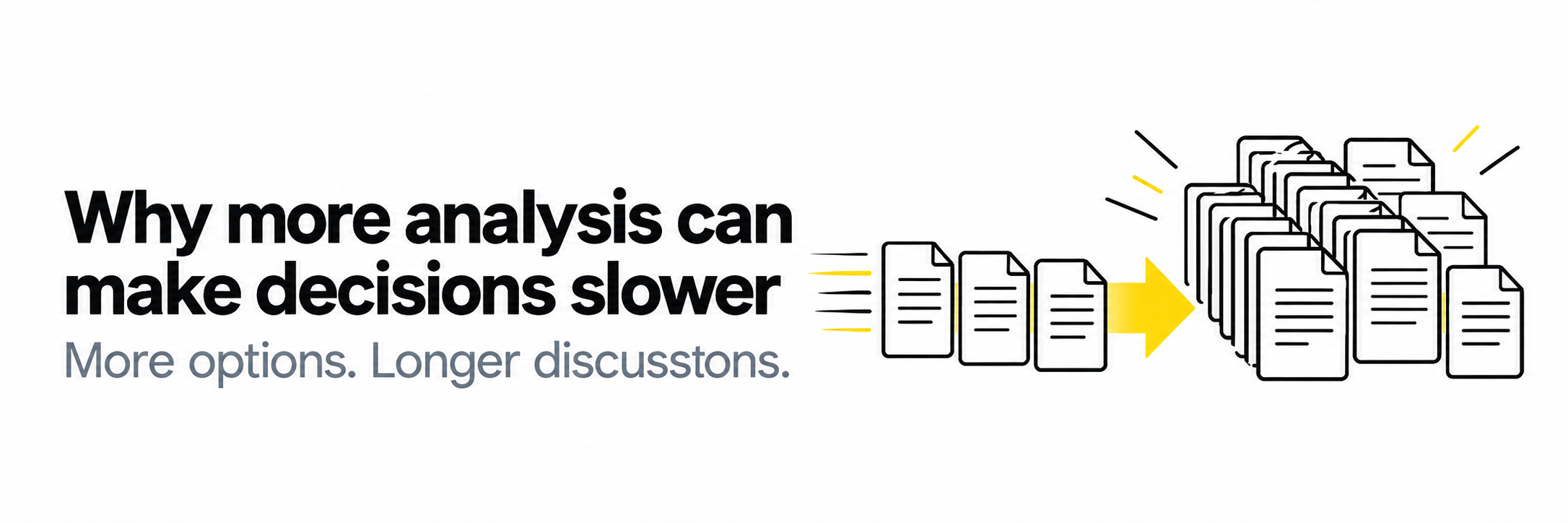
There is another effect worth considering. Generating an additional option once took real time and money; now it can take little more than a prompt. Teams that might once have brought three options to a decision can now bring twelve, with more scenarios modelled, more risks quantified and a much stronger paper to support the discussion, yet the decision itself can still take longer.
AI has made analysis and framing much faster, but in some cases organisations are simply using that extra capacity to do more analysis. Twelve options without a clear deadline can create more complexity rather than helping a decision move forward. At some point, the work has to shift from exploring possibilities to making a call, and while AI can make the analysis much easier, it does not necessarily make that final judgement any easier.
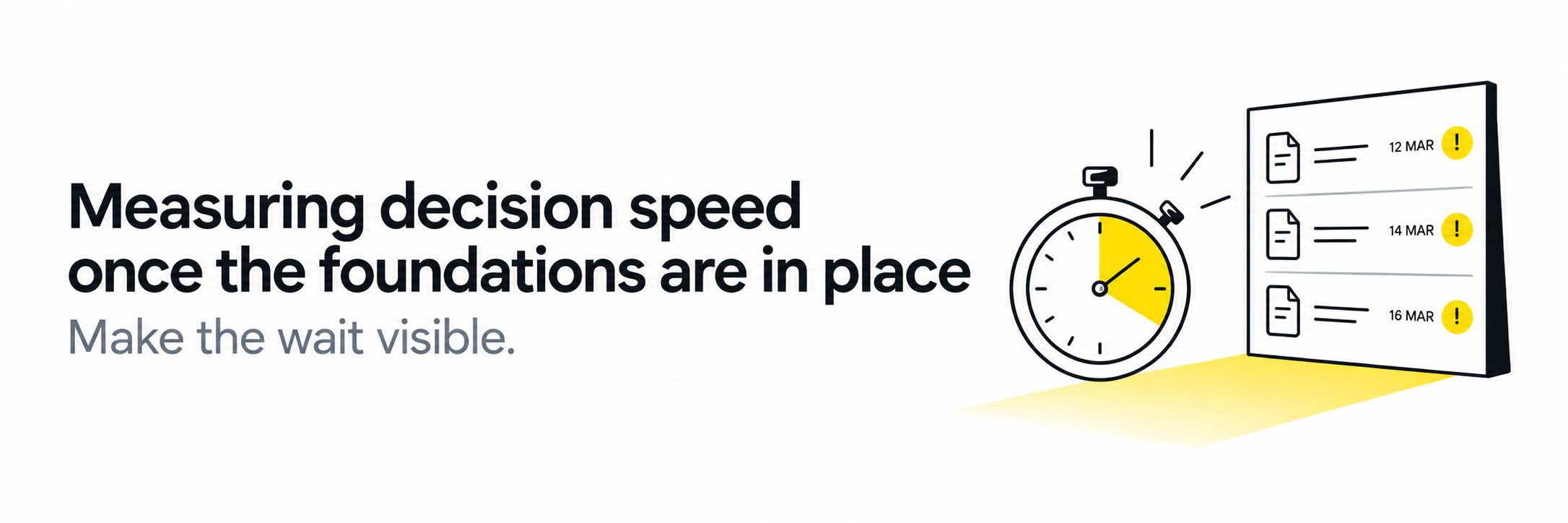
Once the operating model is working well, organisations can start measuring decisions in much the same way they measure delivery. The order matters, because measuring a system that still cannot respond effectively creates pressure without addressing the underlying cause.
In practice, the approach can be relatively simple. Different types of decisions can have different expectations around timing, with reversible team-level decisions made within 48 hours, cross-functional decisions within a fortnight, and larger strategic decisions given a clear date rather than left sitting on a recurring agenda. Those timeframes should be treated as a commitment from leadership, not a target imposed on teams.
Open decisions also need to be visible, including when each was raised, who owns it and how long it has been waiting. For many leadership teams, simply seeing the number and age of those outstanding decisions reveals where the real delays are.
That same clarity increasingly needs to extend to AI agents. As agents take on more routine cognitive work, organisations need to be explicit about what an agent can decide on its own, what needs to be escalated and who remains accountable if something goes wrong. Without that clarity, it is easy to end up with a human reviewing everything, recreating the same bottleneck AI was supposed to help remove.
- Visibility. Take your last ten significant decisions. If you cannot identify when each was first raised and when the organisation actually changed as a result, you do not have clear visibility of how long decisions are taking.
- Structure. Count how many separate groups had to agree before your last significant change could move ahead. That gives you a sense of how many organisational boundaries the decision had to cross.
- Accountability. Count how many people can commit to a meaningful, reversible investment without taking it to a forum. That shows you how much decision-making authority actually sits with individuals.
- Governance. Look at your last governance meeting and work out how much of the agenda was spent making decisions rather than sharing updates. If decisions accounted for less than a third, your governance may be contributing to the delay.
- Ways of working. Ask whether the cadence you use today was designed for the organisation you are now, or the one you were three years ago.
- AI outcomes. Look at an AI initiative that genuinely worked. If the time saved did not translate into a business outcome, look at where the work finished early and then had to wait. One of the areas above is likely to explain why.
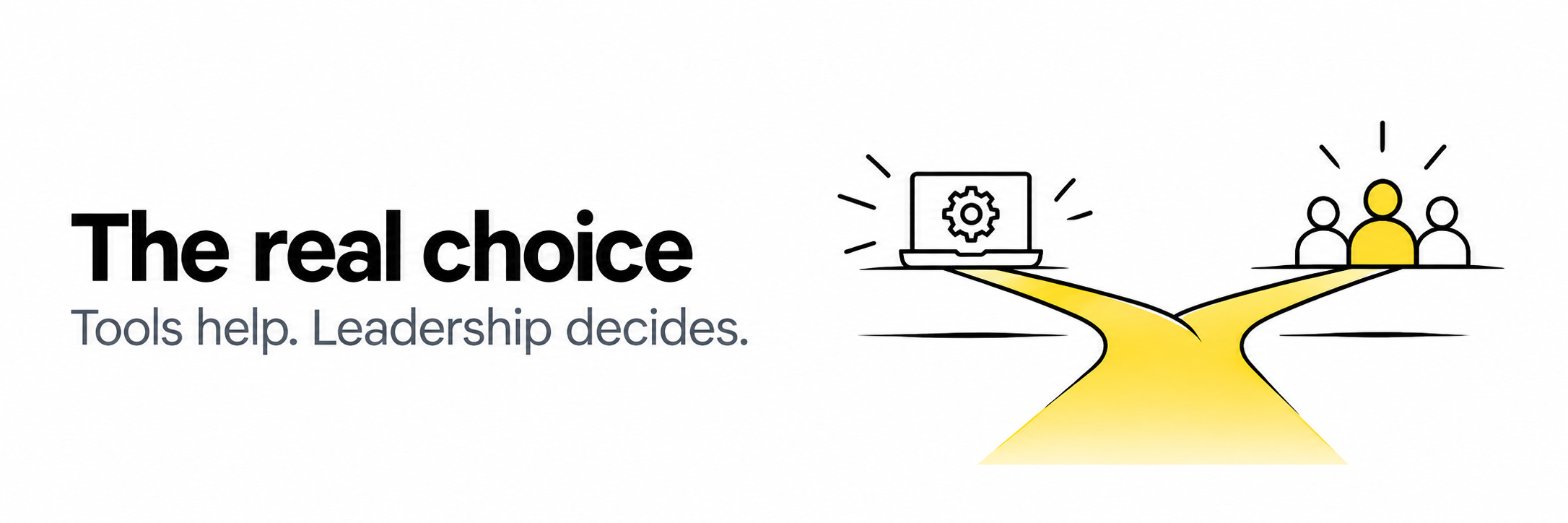
This may arrive at the leadership table as a technology question - which platform to use, which agent to build, which partner to work with or which pilot to run next. But decision speed is not something a vendor can install. It depends on structure, accountability, governance and ways of working, all of which are within the organisation’s control and often harder to change than introducing a new tool.
As AI makes more of the work faster, the bottleneck is beginning to shift from delivery to decision-making. If decisions are still moving at the same pace, making execution faster will not make the organisation faster overall.
Ultimately, the pace of an organisation is shaped not only by the tools people have, but by how quickly it can make and act on decisions. That remains a leadership responsibility.
