

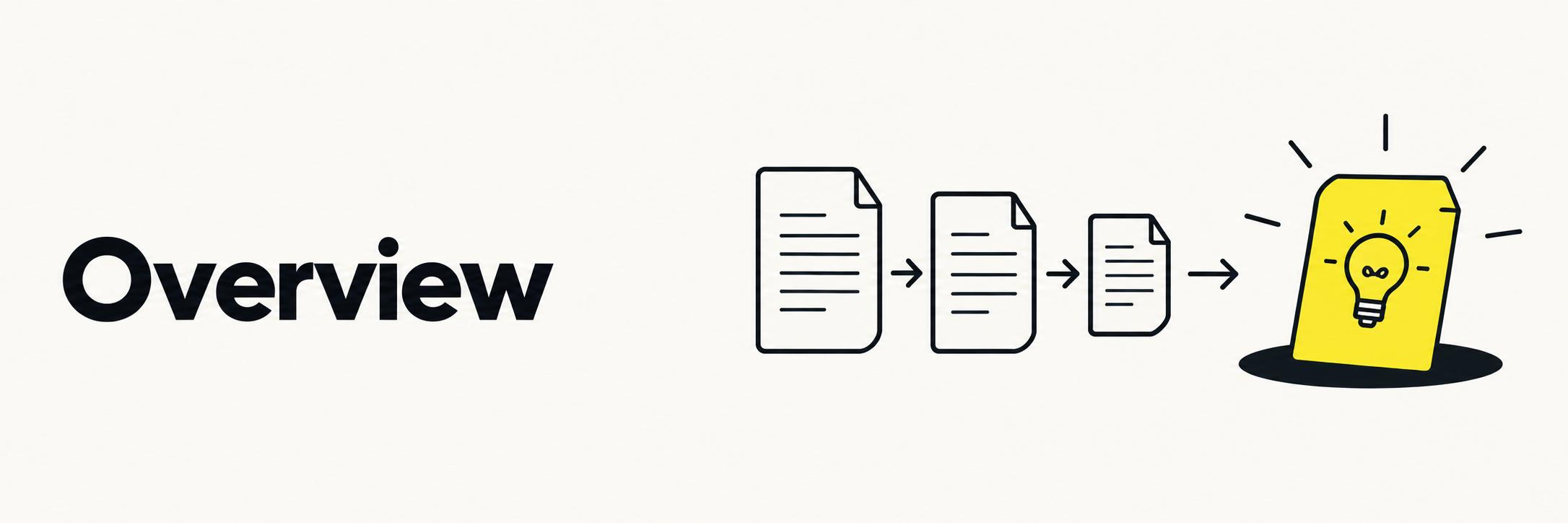
Most organisations aren't inherently slow at making decisions. They're slow because work has to flow from one department to another, with each function debating and refining the options before everyone can reach a point of agreement. Every department carries its own constraints, and in a traditional structure they simply can't talk to each other at speed.
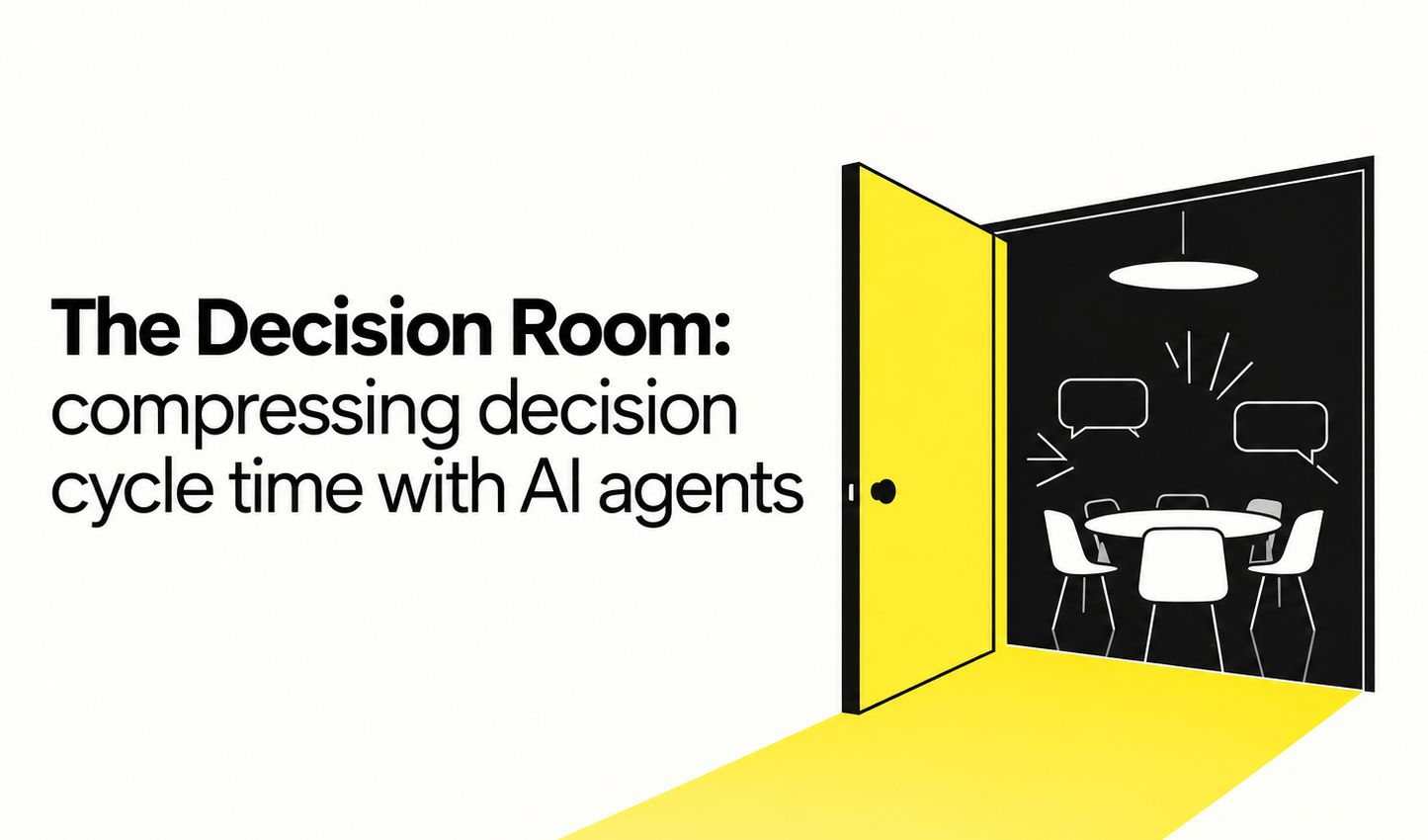
The Decision Room is a demonstration Radically built to show what happens when that conversation is redesigned around AI agents. An orchestrator agent convenes AI agents representing legal, finance, procurement and marketing, each briefed with the real constraints of its function, and they debate a business proposition in front of the leaders who have to make the call.
We used an energy retail scenario because it is one we know well. The pattern applies anywhere a decision has to pass through several functions before it can move.
Launching a new offer in energy retail traditionally takes six to nine months to reach the market. Of that, the initial ideation and feasibility phase alone takes around four months, before anyone knows whether the offer would even work.
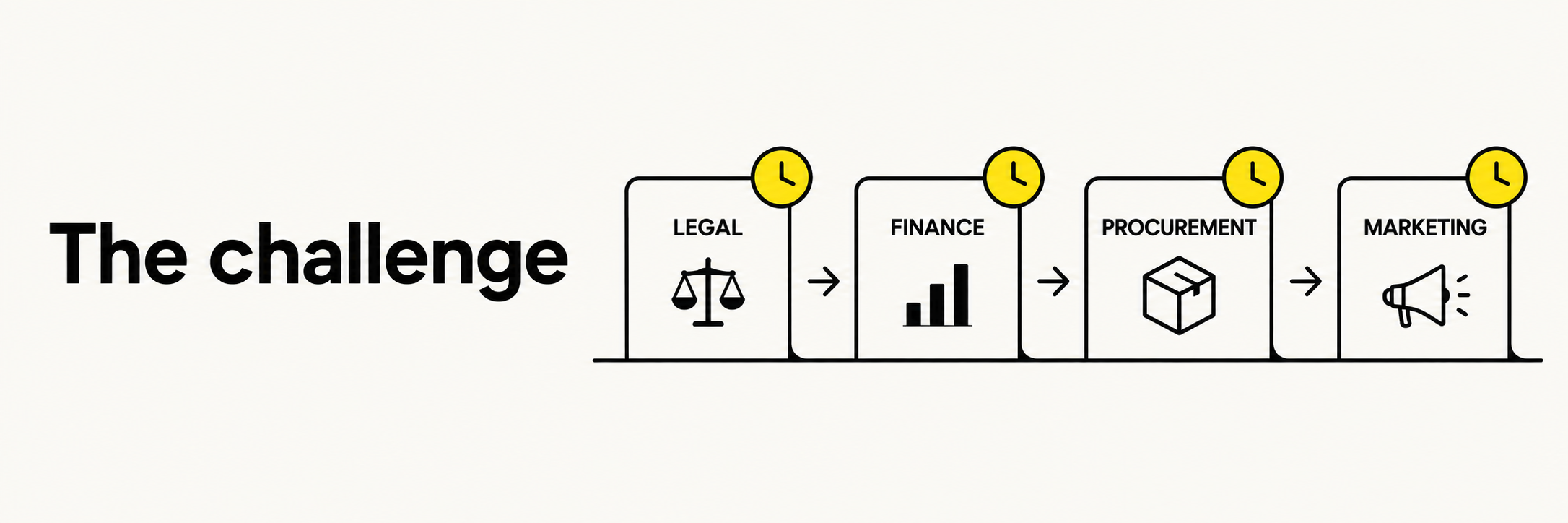
Very little of that time is spent thinking. Legal has to assess the offer against consumer law. Finance has to test whether the margin holds. Procurement has to establish whether the offer can be supplied at the right price. Marketing has to judge whether enough customers will take it up. Each of these is a reasonable question asked by a capable team. The problem is the sequence. The proposition moves through one queue at a time, each department works to its own priorities, and the answers arrive weeks apart and rarely in the same room.
By the time the picture is complete enough to decide on, the market has often moved and the leaders involved have spent months assembling information rather than exercising judgement.
The Decision Room takes the same constraints each department operates under and gives them to AI agents instead.
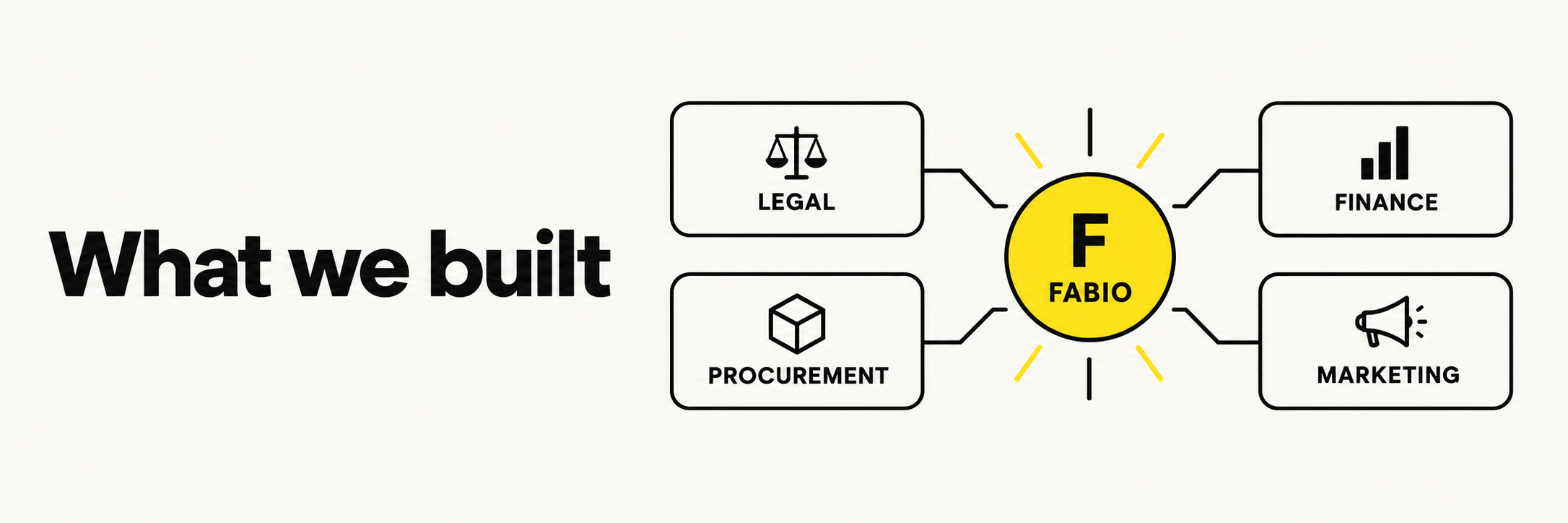
An orchestrator agent, which we call Fabio, chairs the session. The leaders in the room start by talking directly with Fabio, testing different versions of the proposition and pressure-testing the scenarios they care about. Through that conversation the brief is finalised. Fabio then takes the agreed brief to the division agents, introduces the proposition, calls on each agent in turn, pushes back where an argument is thin, and drives the group towards a position the humans in the room can act on.
Four division agents represent the functions that would normally sit in the review chain. Each one is briefed with the rules, thresholds and priorities of its department, so it argues the way that department genuinely would. The legal agent raises the compliance risks. The finance agent interrogates the numbers. The procurement agent challenges supply and cost. The marketing agent tests the customer case.
The debate happens live, in front of the leadership team. Objections are raised, answered and traded off in the open rather than buried in a sequence of review documents. The agents surface the trade-offs. The people in the room make the decision.
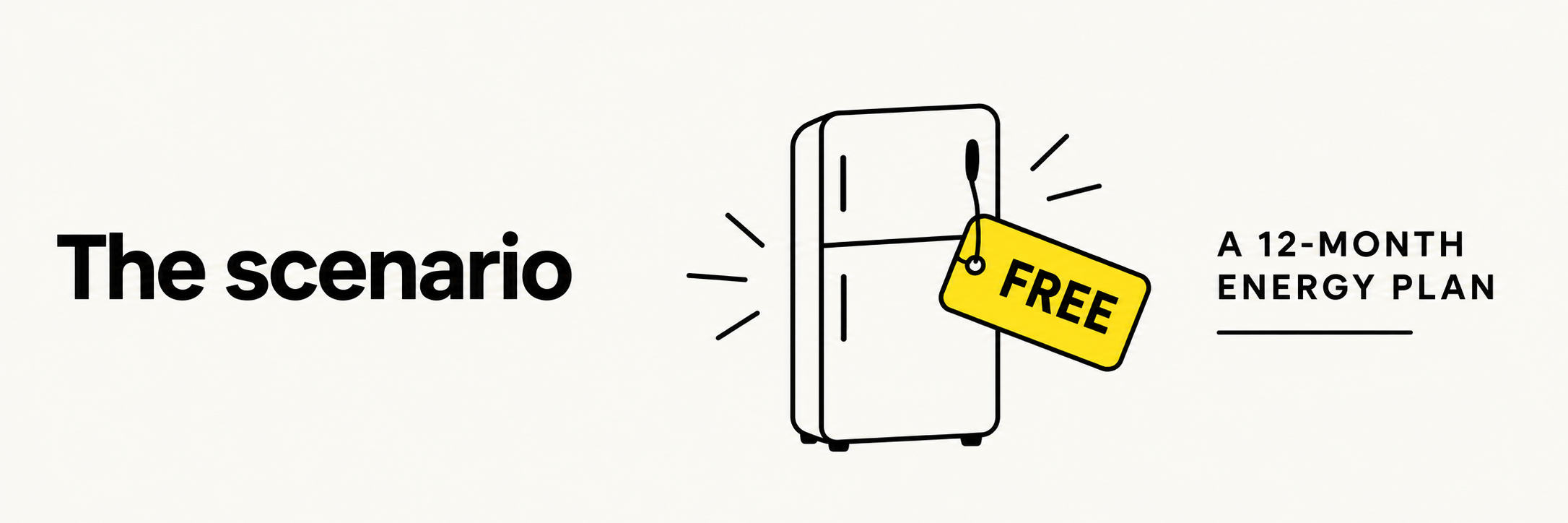
We put a familiar retail proposition through the room: a free fridge when a customer signs up for a 12-month energy plan.
The legal agent tested whether the offer stands up under the Consumer Guarantees Act, and what obligations the retailer takes on when the fridge fails or the customer leaves early. The finance agent interrogated whether the margin survives the cost of the appliance across the contract term. The procurement agent asked whether fridges could be sourced at a price and volume that made the offer viable. The marketing agent challenged whether enough customers would actually take it up, and whether the offer would attract the right ones.
Within minutes the leadership team had every objection on the table at once, along with the conditions under which the offer would work and the points at which it wouldn't.
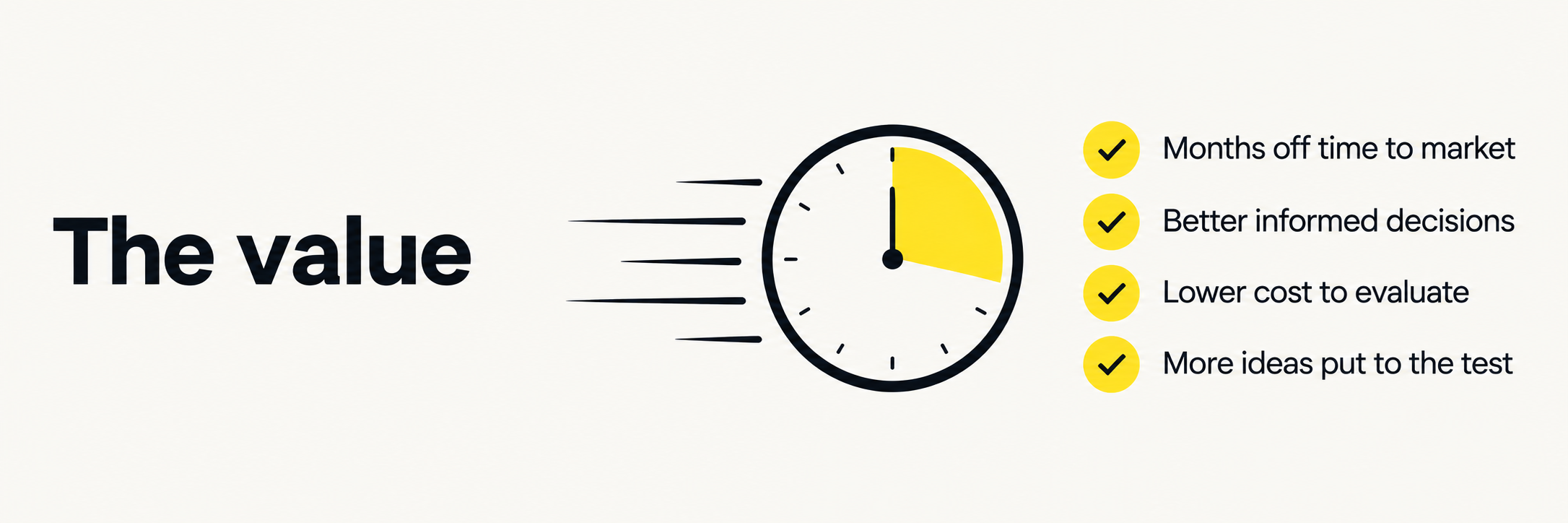
Put your leaders in a room with Fabio, and feasibility work that used to take months can be done in a single day. The proposition is tested against every department's constraints, the trade-offs are on the table, and the go or no-go call gets made with the right people in the room and better information in front of them. That takes months off the front of a six-to-nine-month path to market.
Speed is the obvious gain, but the decision itself gets better as well. In a traditional review chain each department sees the proposition on its own and answers its own question, so the tensions between those answers only emerge later, if they emerge at all. In The Decision Room every objection is raised in the same conversation. Leaders can see that the offer clears legal but strains the margin, or that the marketing case only holds if procurement lands a lower price, and they can weigh those tensions directly rather than discovering them weeks apart.
It also costs less to get there. A cross-functional evaluation today pulls four teams away from their day jobs for weeks and adds a layer of co-ordination on top. Here each department's constraints are encoded once and applied every time, so the specialists who built those constraints are free to focus on the exceptions and the cases that genuinely need them.
For leaders, the shape of the work changes. Less of their time goes into gathering and reconciling input, and more of it goes into the part only they can do, which is weighing the trade-offs, setting the risk appetite and making the call. The decision still belongs to them. They simply get to make it sooner, with their attention on the judgement rather than the paperwork.
As the time it takes to make good decisions compresses, the organisation can afford to test far more scenarios. Today, many ideas never get properly evaluated at all, because nobody can justify tying up four departments for months just to find out whether an offer might work. When that evaluation takes a day instead, those ideas can be put through the same rigorous debate as the big bets. The weak ones are retired early, before they consume anyone's time, and the promising ones get backing sooner. Over time that matters more than any single decision, because the organisation starts deciding at a different rhythm altogether.
The technology behind The Decision Room is not the interesting part. What matters is what it shows about the way organisations are set up.
The delay in cross-functional decisions has never been caused by people being slow. It is caused by structure, by an operating model designed for a world where humans had to carry every step of the conversation. Give agents the same constraints and the same questions, and the sequence collapses. Legal, finance, procurement and marketing can be in the room together, every time.
That changes the roles involved. The specialists in legal, finance, procurement and marketing spend their time maintaining the constraints their agents work to, and handling the genuinely novel cases those constraints don't yet cover. The team's operating model is rebuilt around humans and agents working together, each doing the part they are best placed to do.
This is what we mean by cycle time compression. Not the same tasks done a little quicker, but a fundamentally faster path from idea to decision to market. It is also the point where AI stops being a productivity tool for individuals and starts changing how quickly the organisation itself can move.

Any decision that currently waits on several departments to weigh in, one after another, is a great place to start.
If you'd like to see it applied to a decision your organisation is working through right now, get in touch.
