
From Analogue to AI: Building a Hyper-fast Operating Model with Good Brakes
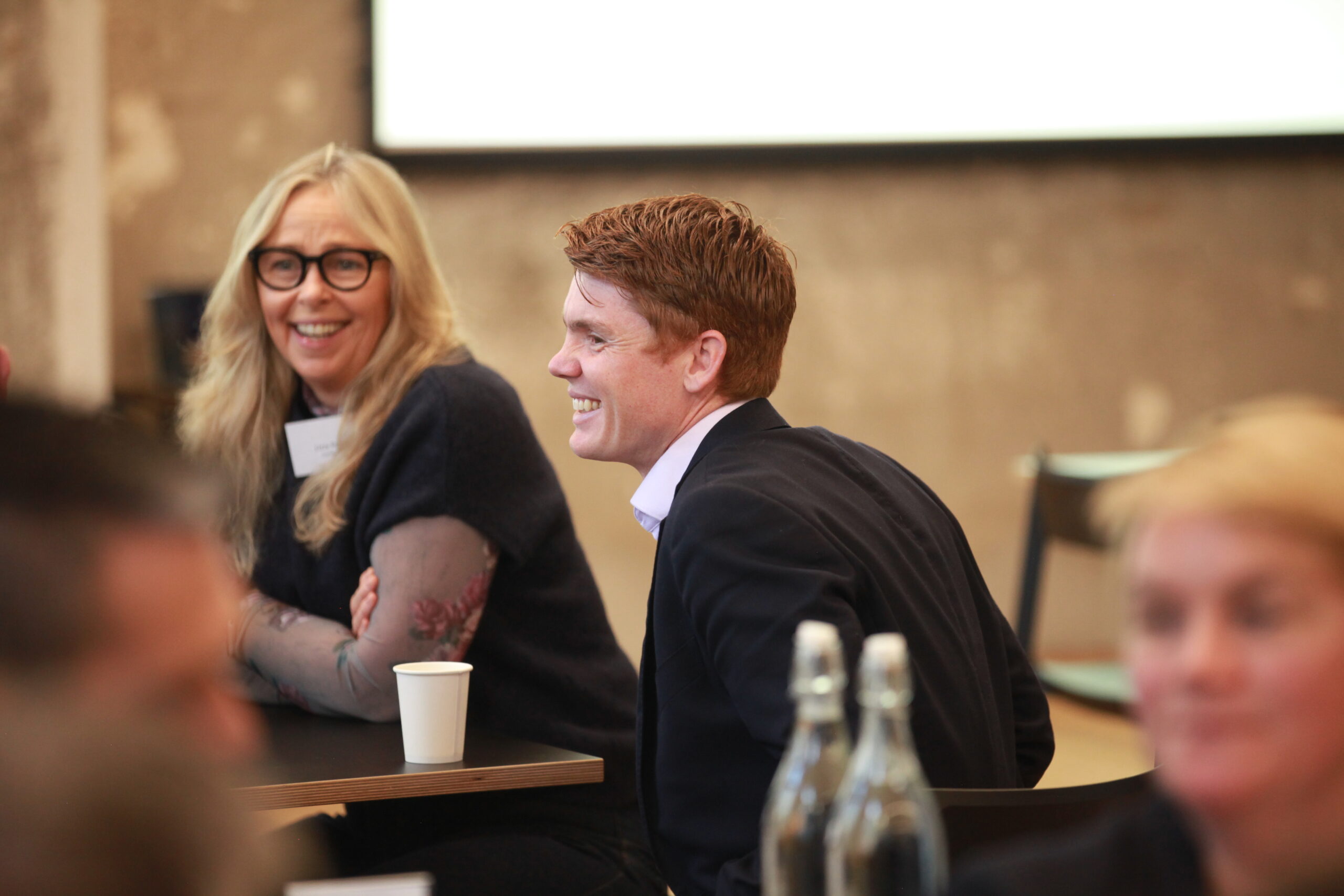
In our August Adaptive Leadership Collective, Will Carey-Hill explored what it takes to build an organisation capable of operating at the speed of AI.
The technology is advancing quickly, but for many organisations, the biggest constraints sit elsewhere: in structures, governance, decision-making and ways of working that were designed for a more analogue world.
Drawing on his experience across banking and financial services, Will explored how leaders can rethink their operating model to remove friction, accelerate the flow of work and create an environment where people, processes and AI can work together effectively.
Here are some of the key insights from the session.
AI is accelerating delivery. Operating models need to keep up.
The barriers to building with AI are rapidly disappearing. Models, frameworks and tools are more accessible than ever. But turning that potential into meaningful results still comes down to the operating model, and most organisations aren't designed for delivery to move this fast.
In this session, Will Carey-Hill explored what needed to change as AI accelerated execution. The conversation looked at how strategy, prioritisation, governance and organisational structures needed to evolve so organisations could take advantage of what's now possible.
Key themes included:
- Building operating models that could keep pace with AI-enabled delivery
- Moving from annual planning towards continuous strategic alignment
- Continually reprioritising as technology and business needs evolved
- Evolving governance and decision-making to support faster execution
- Shifting from capacity-based structures towards capability ecosystems
- Putting existing operating model frameworks into practice
AI is not just a technology challenge
The biggest challenge isn't adopting AI itself. It's evolving the way organisations work so they can take advantage of what's now possible.
As AI makes execution faster, more of the challenge shifts into strategy, prioritisation, governance and decision-making. Organisations need systems that can continually align around what matters most and adapt as technology and business needs evolve.
This makes the operating model increasingly important. The opportunity is not simply to introduce new technology, but to create an organisation where structures, systems, people and AI can work together to turn strategy into results faster.
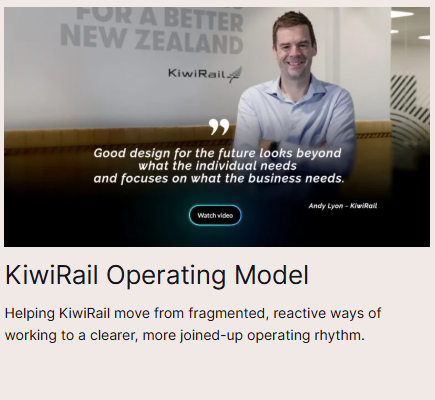
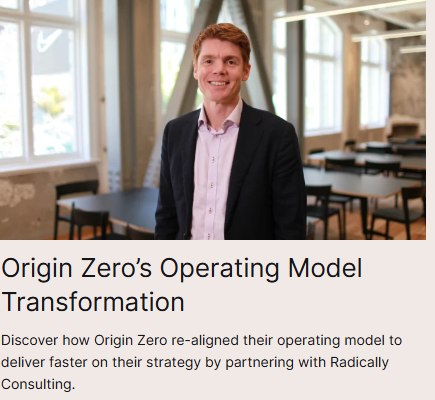
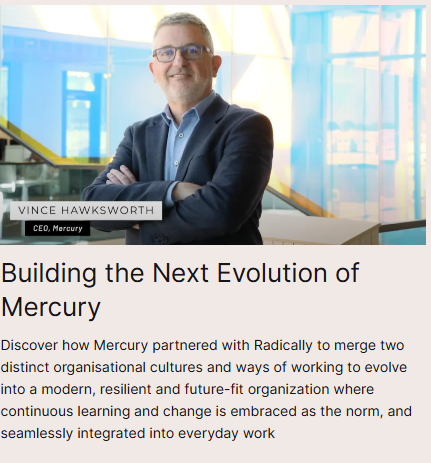
See how operating model change works in practice
Want to improve productivity through your operating model?
If your organisation is working hard but struggling with slow decisions, competing priorities, unclear accountabilities or delivery friction, the issue may not be effort. It may be the system of work.
Radically helps leadership teams design operating models that create clearer decision-making, better alignment and stronger execution.
Stay connected
This video was recorded as part of the Adaptive Leadership Collective - a regular community series for senior leaders working through the practical realities of leading in complexity.
The ALC brings together executives, general managers, transformation leaders and senior practitioners to explore topics such as strategy, leadership, operating models, change, delivery and organisational performance. Each session features a real leader sharing practical lessons from the field, followed by honest conversation about what those lessons mean in complex organisations.
It is a place to hear real stories, connect with thoughtful peers, and keep building the leadership capability needed to help organisations adapt, perform and change.