

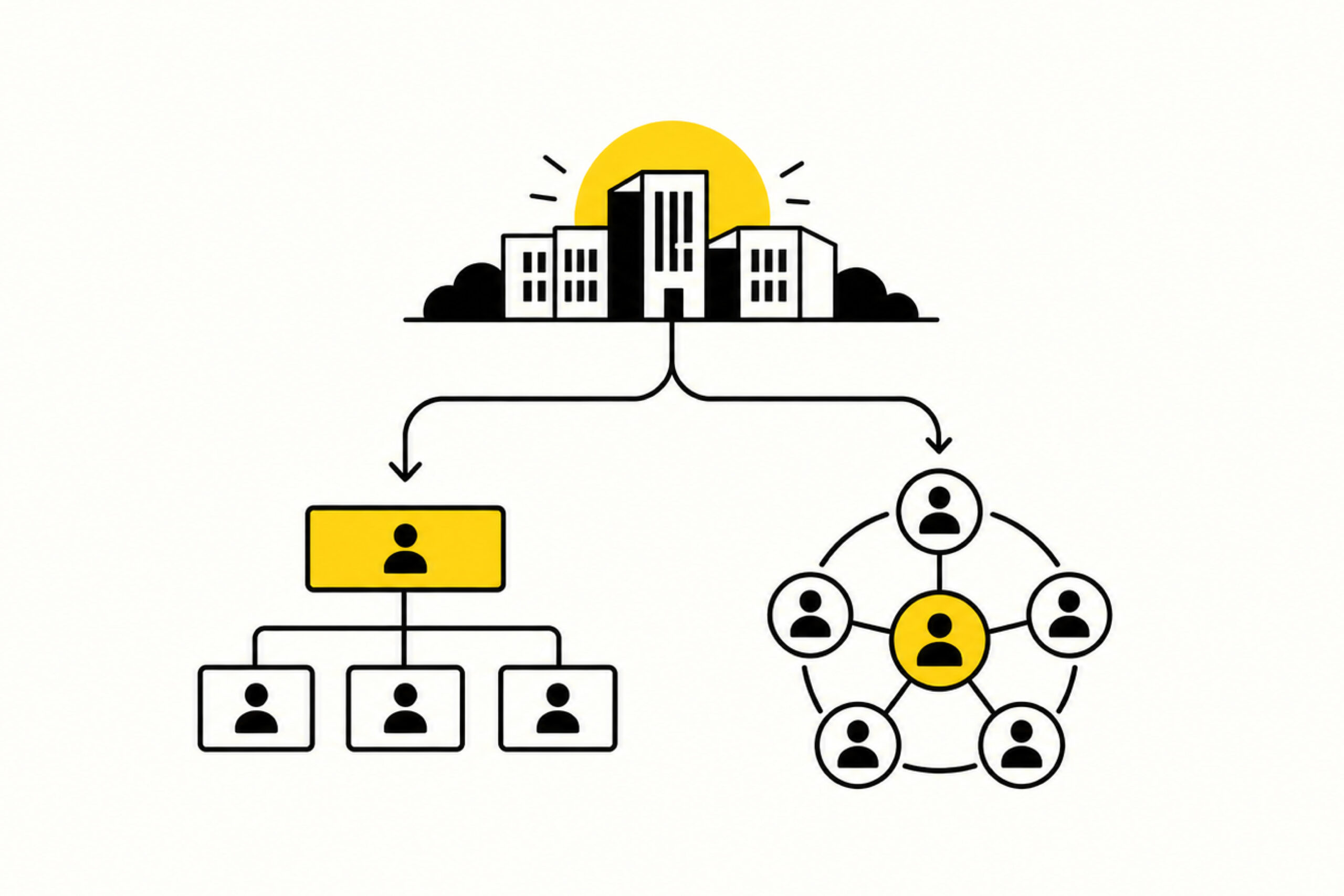
Your structure was built to run today’s business. Your strategy needs something it wasn’t built for.
Most strategies don’t fail in the boardroom. They fail in execution. In organisations built for stability, the functional structure runs today’s business well. But strategy demands change that cuts across functions, and that structure has no natural home for it.
The usual responses are a restructure or a PMO, and neither reliably delivers the intended outcome. The highest performing organisations we work with take a different approach. They keep a macro structure, aligned to the strategic drivers of value, that delivers the organisation’s KPIs. Alongside it, they build micro structures that drive strategic change across that stable core: complex programmes, cross-cutting initiatives and transformations.
THE FALSE CHOICE

The pressure to “go value stream” is strong, and for some organisations it is the right answer. But it is often presented as the only way to execute strategy faster. Where the functional core does the heavy lifting, that framing does real damage.
In manufacturing, supply chain and operations, functional structures carry enduring, repeatable, high-stakes work. That work rewards depth, standardisation and clear ownership. Dismantling it in pursuit of cross-functional flow erodes the very reliability those functions exist to provide.
The more useful question is not “functional or value stream?” but rather: how do we keep our functional strength and still solve complex, cross-cutting problems at pace, without reorganising the whole company?
Our answer is to stop treating structure as a single choice and to run two in parallel:
- A stable structure for the enduring work.
- A temporary one for the problems that cut across it.
This matters most for leaders whose functional core does the heavy lifting: the manufacturing floor, operational business units, supply chain, and the sales and account management arms of organisations. For them, a wholesale shift to value streams would cause more disruption than it resolves.
MACRO STRUCTURES: THE TRADITIONAL STRUCTURE OF LEADERSHIP
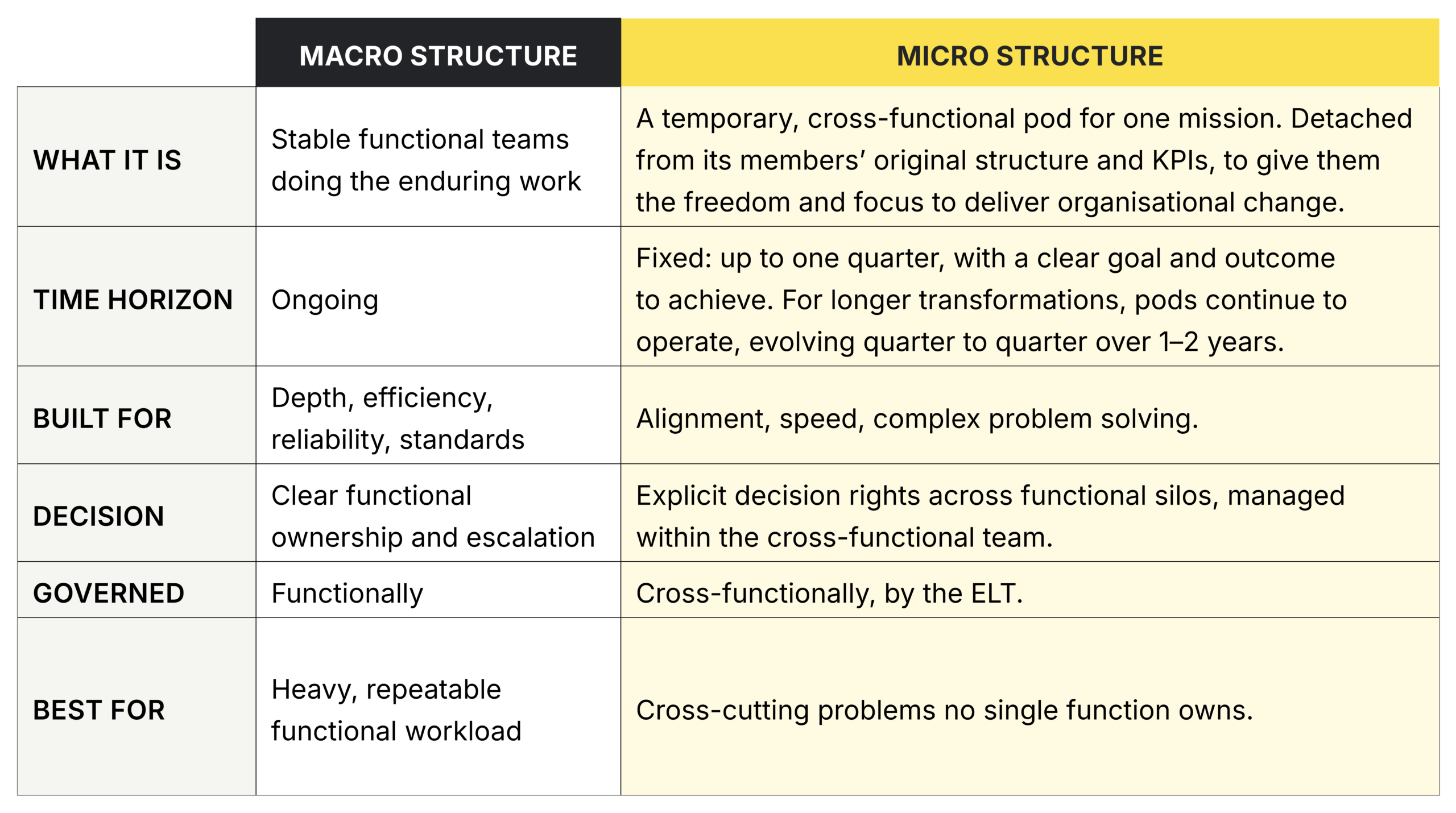
The macro structure is the traditional structure of leadership. Functional leaders, often the deepest experts in the business, lead frontline teams through clear reporting lines and chains of command to deliver organisational KPIs and functional priorities. It works best for stable, predictable, operational work, or work that sits within one to three functional teams.
These are the stable functional teams that do the enduring work of the organisation. They own capability, hold standards and carry most of the throughput. In functionally heavy organisations, most work should stay here. The macro structure is not the problem to solve. It is the foundation to protect.
MICRO STRUCTURES: AN ORGANISATIONAL CAPABILITY, NOT A PERMANENT LAYER
A micro structure is the ability to stand up a network of empowered teams around a mission, and to redeploy them once the mission is complete. It is built for complex change that crosses functions and business units, and it needs clear roles, governance and ways of working to coexist with the macro structure. Where the macro structure runs on stable reporting lines and functional KPIs, the micro structure runs on a network that forms and re-forms around missions, with leadership in the middle as an enabler rather than a gatekeeper.
In practice, this means standing up a network of empowered teams for up to one quarter, with a clear goal and outcome. A pod brings a cross-functional group together to agree the solution, the strategy and the trade-offs on a complex problem. Once the outcome is delivered, people return to their functional teams and take that alignment with them.
Larger transformations work differently. The pods continue to operate, resetting their goal and outcome each quarter, over one to two years. This depends on strong champions who stay connected to both the transformation and their functional role, because the change is layered and complex.
Figure 1 - Two organising logics, side-by-side
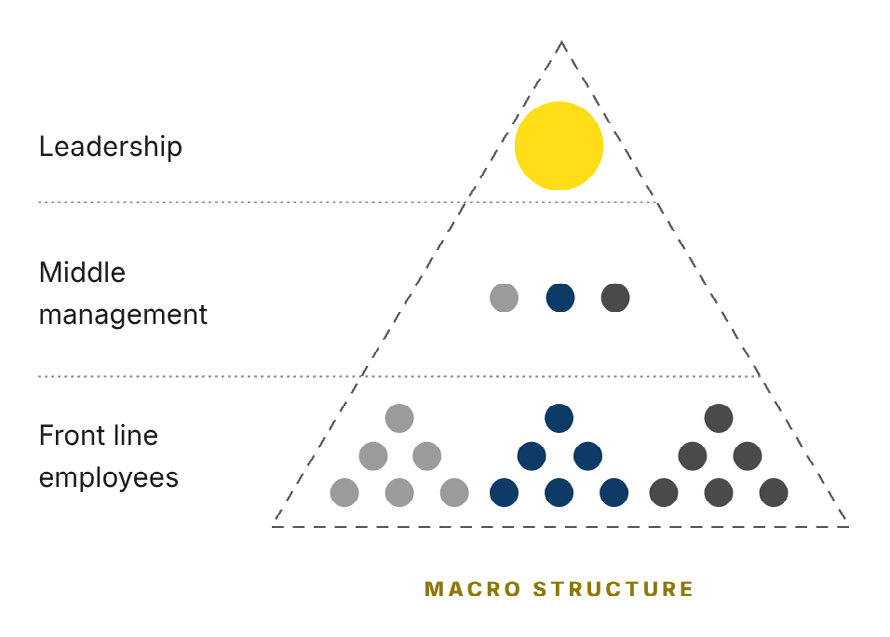
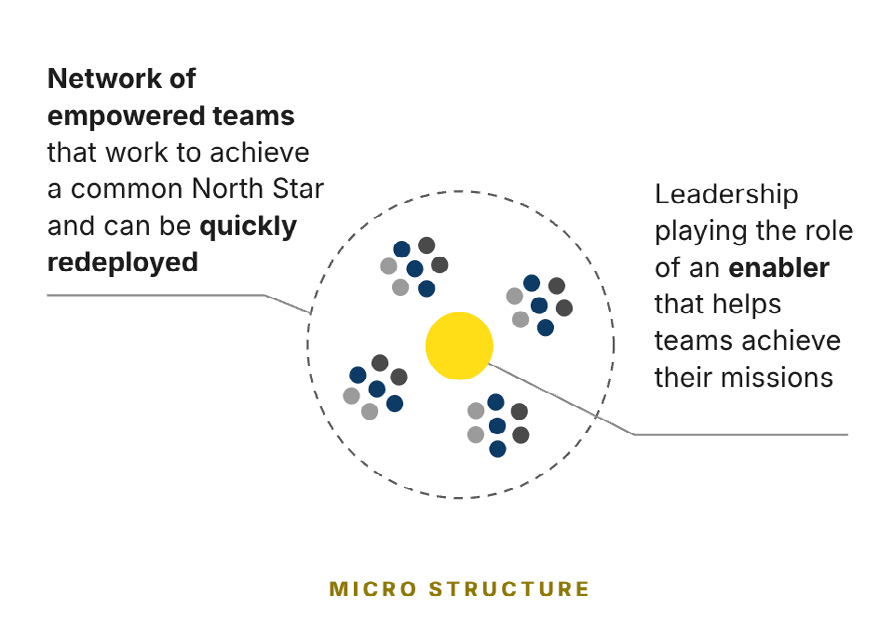
Macro runs on stable reporting lines and functional KPIs. Micro runs on a network that forms and re-forms around missions,with leadership in the middle as an enabler rather than a gatekeeper.
WHY NOT A PMO?
The usual answer to cross-functional complexity is a PMO, or something that resembles one. In our experience, it is the wrong answer. The business hands coordination of the change to a PMO and a layer of project and programme managers, when it is the leaders and functional experts who need to own the outcome. That hand-off creates delay. More significantly, it creates false alignment. Status reports and RAG trackers make the work appear coordinated, while ownership and cross-functional attention gradually erode.
The alternative is to make complex delivery and change part of leadership capability itself, with leaders and functional experts working through the problem, and the tension between functions, together. This is more demanding, and it runs against the instinct to delegate coordination. It is, however, where genuine alignment and lasting transformation are achieved.
Figure 2 - The life cycle of a micro structure.
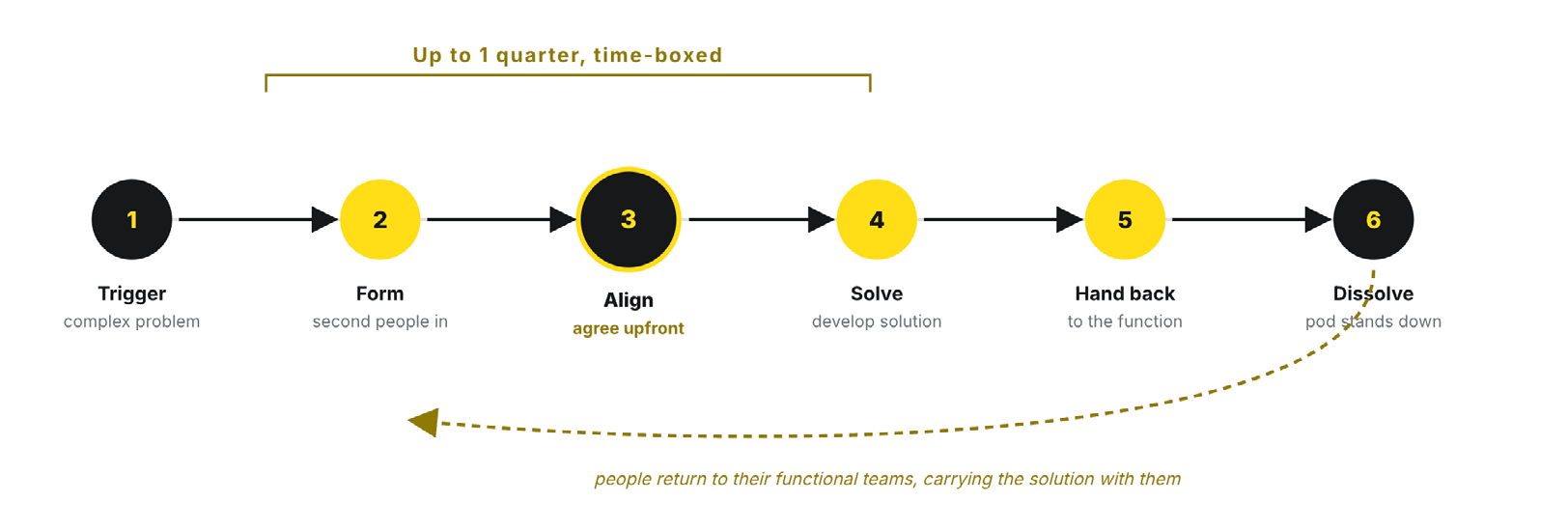
Most of the speed comes from agreeing upfront. For larger transformations, pods repeat this cycle quarter to quarter over one to two years, with a new goal each time.
TWO STRUCTURES, SIDE BY SIDE
WHY AGREEING UP FRONT MAKES PODS FAST
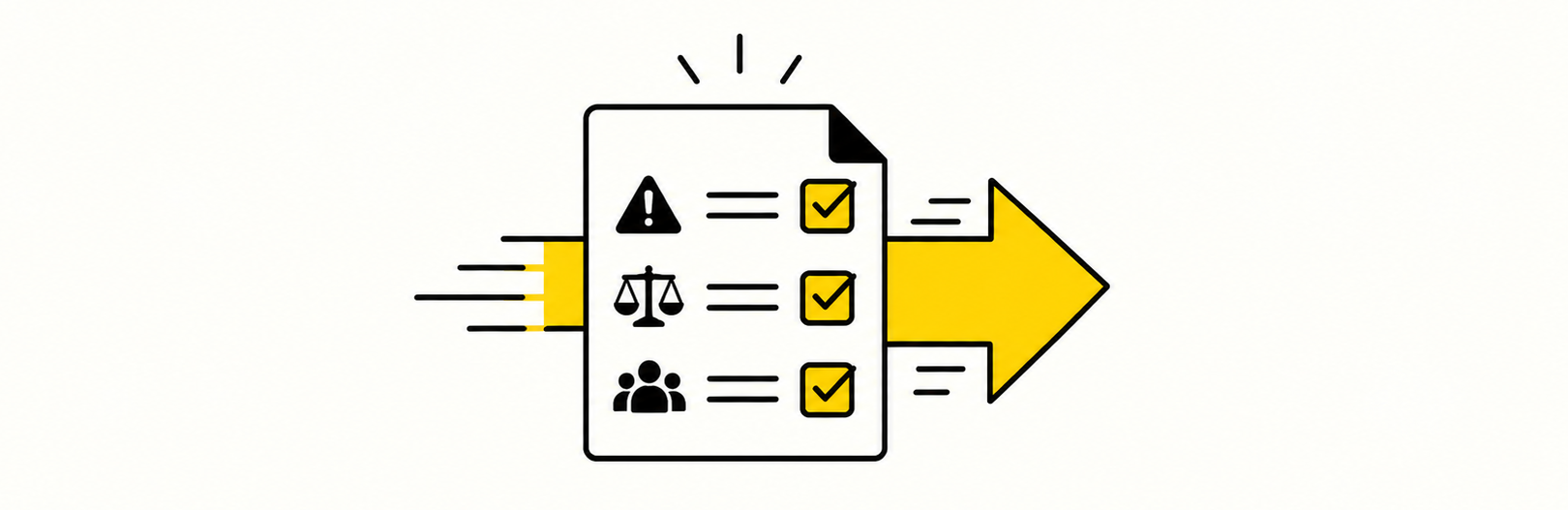
Cross-functional work rarely stalls because people cannot execute. It stalls because they never genuinely agreed on the problem, the trade-offs, or who decides. A pod compresses that agreement into days rather than months. Once it is in place, execution is straightforward, often back in the functional structure, at normal pace and with normal ownership.
ONE OPERATING MODEL, TWO MODES
Running two structures is not a one-off design decision. Strategy moves through the same operating model whether the work sits in a function or a pod. That is why we use the same five elements we design every operating model around: structure, governance, ways of working, future capabilities, and leadership and culture, all built around the teams and individuals doing the work.
Figure 3 - The system that turns strategy into results, for both structures.
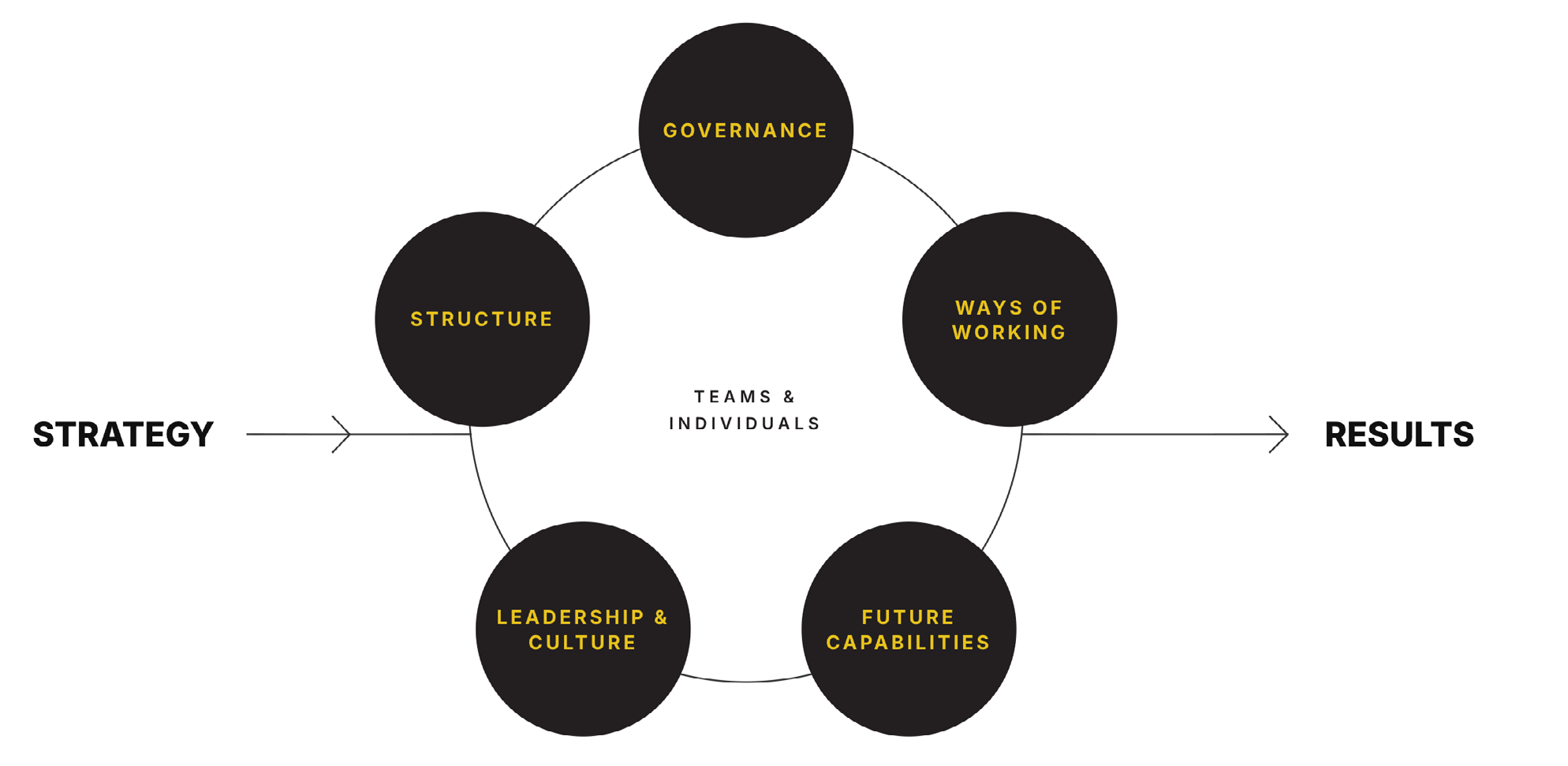
Every element has to work in two modes, functional and cross-functional.
Most organisations already form pods informally. They do so through individual heroics rather than organisational capability. Success depends on a few committed individuals, and every pod is experienced as a disruption. Making the two structures work as a system means designing each element of the operating model deliberately.
Across all five, the hardest part sits with the executive team: making trade-offs between functional and cross-functional priorities. Leaders have to hold that tension while giving each side the focus it needs. Where this is done well, the same clarity allows talent to move quickly between the macro and micro structures, with minimal friction.
THE FIVE ENABLERS
1. Structure - role clarity and decision rights
Structure has to hold two logics, and this is where decision rights live. Functional roles are accountable for organisational KPIs within the macro structure. Pods are accountable for the mission they were formed to deliver across it. Both need explicit decision rights: who decides, who is consulted, who executes. Without them, people revert to hierarchy inside a pod, or carry pod-style autonomy back into the function when the mission ends.
2. Governance - one executive table, two rhythms
The executive team governs the functions on KPIs, resourcing and standards. It also governs the portfolio of cross-functional change: sponsoring and funding pods, and deciding when they stand up and stand down. The same table has to manage both, and the trade-offs between them. Otherwise the two structures compete rather than complement each other.
3. Ways of working - two delivery models
Functions run on standard cadences, handoffs and continuous throughput. Pods run on iterative delivery, design sprints, workshops and rapid alignment. Each has its own rhythm, and people need to know which one applies to the work in front of them.
4. Future capabilities - seeing the whole system of work
Leaders need visibility beyond their own function - what is running in the macro structure, what is active in pods, and where capacity is genuinely available rather than double-booked. They then need the judgement to move people between the two without compromising either. That draws on business acumen, facilitation, complex problem solving and human skills more than technical depth.
5. Leadership & culture - leading and following
People need to work confidently within functional lines, and to lead a pod one week and follow in another the next. For leaders, that means setting aside positional authority inside a pod and resuming it in the function. Adaptive and change leadership makes this possible, building the empowerment and psychological safety teams need to raise problems, challenge assumptions and decide without waiting for permission.
With these in place, standing up a pod is no longer a disruption but an established way of working, supported by governance that expects it and a culture that can move between the two modes.
QUESTIONS TO ASK YOUR EXECUTIVE TEAM
- Structure: When a pod forms, is it clear who decides?
- Governance: Do you govern change as deliberately as you govern functional KPIs?
- Ways of working: Can people tell which delivery model applies to the work in front of them?
- Future capabilities: Can your leaders see where capacity is actually available across functions and pods?
- Leadership and culture: Are your leaders as comfortable following inside a pod as they are leading a function?
You do not have to choose between running the business and changing it. Nor do you have to restructure the whole organisation to do both.
Strategy is executed through the operating model, not alongside it. An organisation that can run the business and change it at the same time is created through deliberate choices. We help organisations design the operating model that fits, and build the capability to run it. Let’s talk.
